

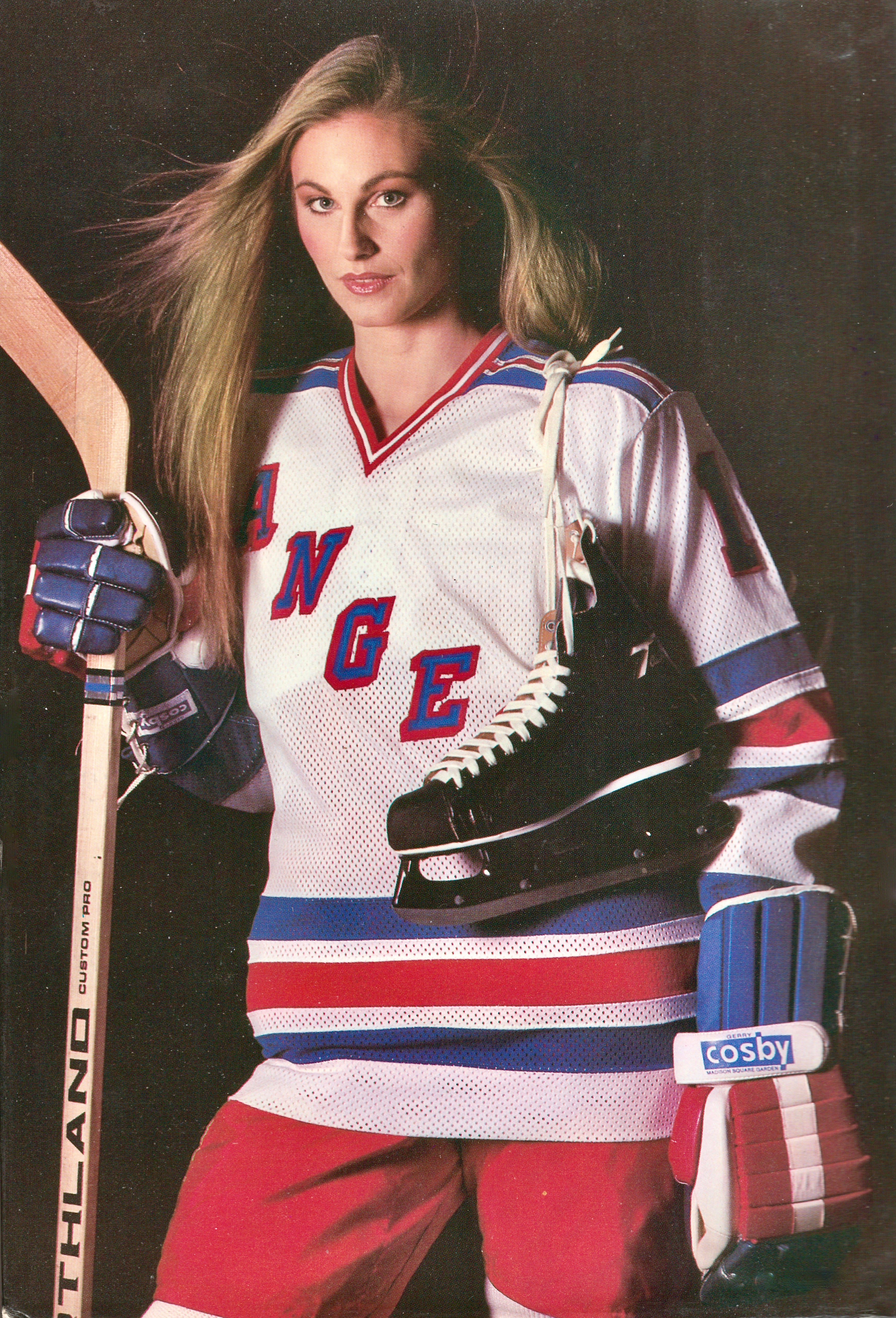
I love being able to tell people I started reading Don DeLillo when I was 9. It gives my biography a real precocious genius child edge, but the fact is that I only screamed and begged for my grandfather to buy it because Amazons was a book about hockey. Only it wasn’t. It also wasn’t really a memoir written by the first woman to play in the NHL, and DeLillo’s name wasn’t even on it. Instead, I tried my best to understand what the hell was going on in “Cleo Birdwell’s” story, and had the book confiscated after I asked my line what the line, “Talking about pussy, my wife’s been keeping it under wraps. She rolls it out once a year, on New Year’s Eve. I’m supposed to say, ‘Whoopee, the dessert trolley!” A few years later, I found it in a box in my basement, and decided to try it again. I was pretty confident in my knowledge of ice hockey history, and was pretty certain that there had never been a woman player in the NHL. This fact was confirmed when Manon Rhéaume signed a contract with the Tampa Bay Lightning in 1992, appeared in a few preseason games, and the media acted like sexism had been solved.
Years later, when I had officially entered my young white man phase of reading the postmodern masters, a copy of Amazons was in front of me again at another used bookstore. This one was nestled next to a first edition hardcover of DeLillo’s Great Jones Street that I often regret not purchasing since it was in great condition and going for eight dollars. I paid about forty more for a lesser copy a decade later. I picked Amazons off the shelf. The scruffy guy behind the counter who had the look of somebody who was on the verge of finally giving up on the novel he’d been working on for fourteen years laughed. He said something about, “DeLillo’s chick hockey novel.”
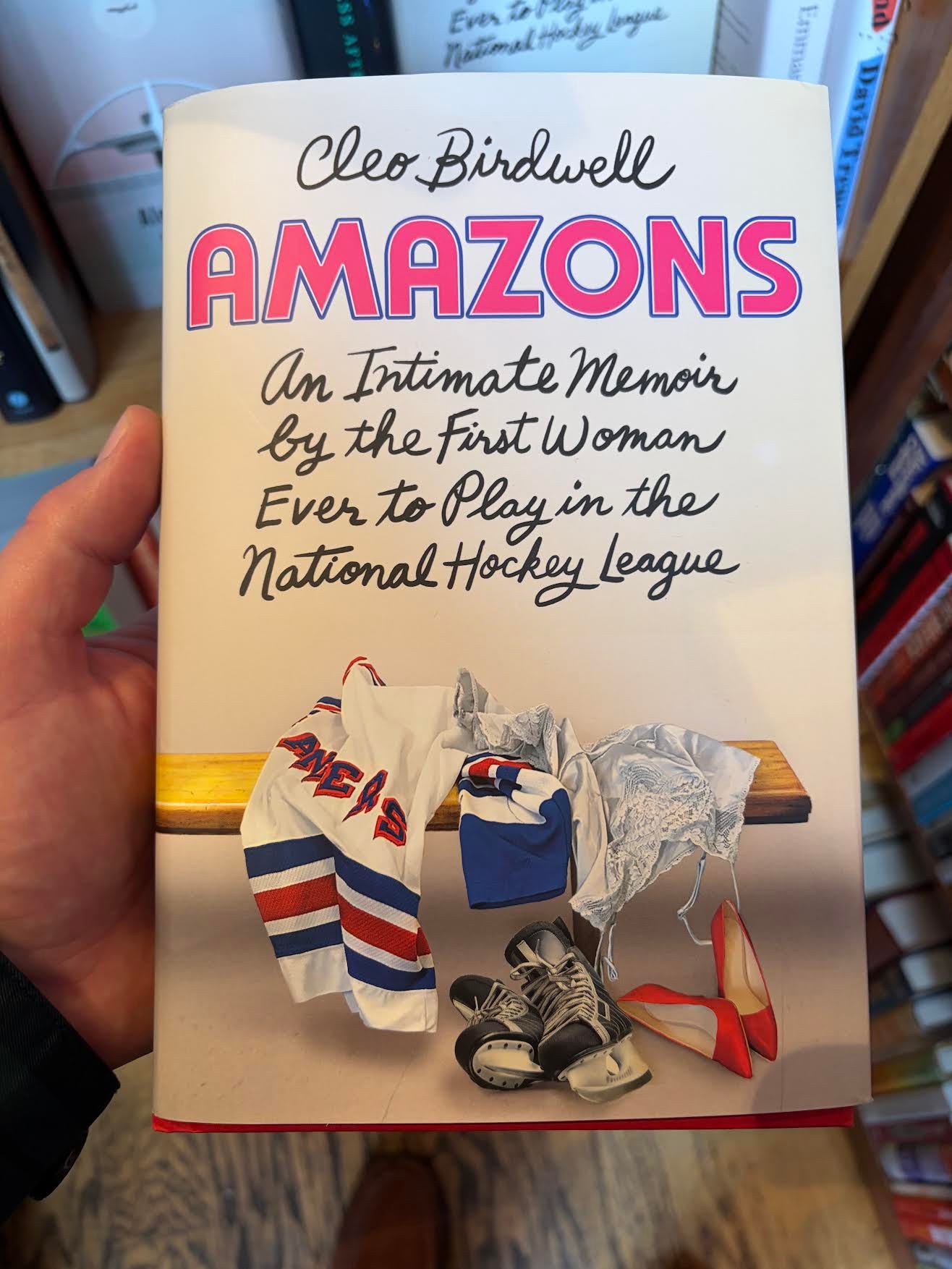
He explained that the writer had written it, assuming it was a money thing, that the writer was looking for easy cash around 1980 and took on the gig. I’d later find out he co-wrote the book with Sue Buck, an old colleague from his days writing copy for Ogilvy & Mather, but as Alexandra Alter pointed out earlier this year, DeLillo “ended up writing it himself.”
DeLillo famously acted like he had nothing to do with the book, and every few years there’s some appreciation for it. My favorite has always been Keith Gessen’s from 2006, when he wrote that Amazons was “the closest thing we have to a great American hockey novel.”
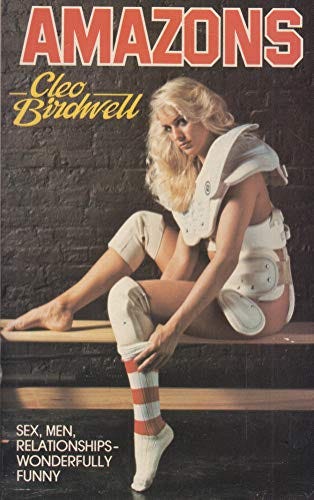
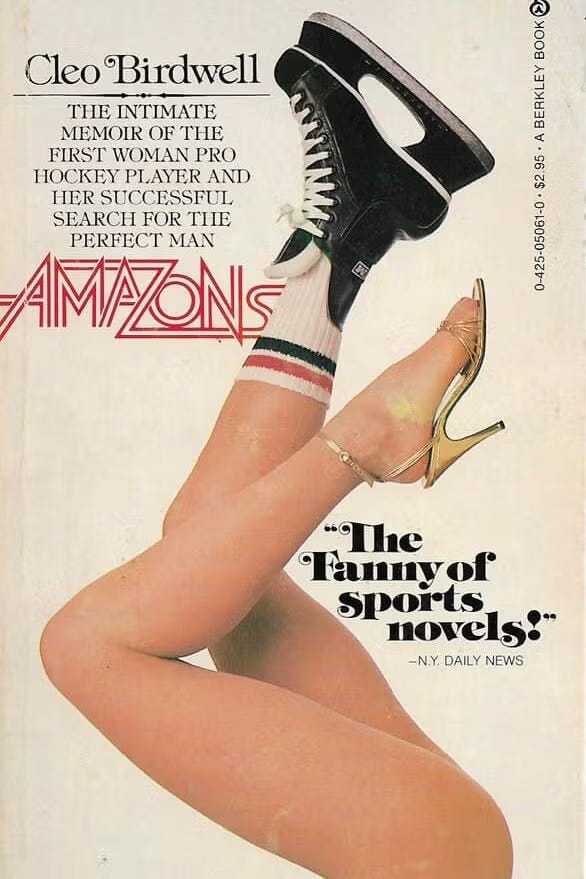
Two decades have passed since Gessen wrote that. There’s still no better American hockey novel that I know of—but there is Rachel Reid’s Game Changers series, the gay hockey romance novels that spawned the hit TV show Heated Rivalry. I’ve never read the books or seen the shows, but I know more than a few people who are fanatical about both. In terms of sales, Reid has sold more books than Amazons a thousand times over, and people love the stories, but her books won’t get listed among the great American hockey novels. I don’t say that because I’m one of those anti-genre people, but because of the simple fact that Reid’s from Canada, so even if her next entry in the series was on the level of Moby-Dick, it’s disqualified from making the list.
Still, the success of Heated Rivalry has made the impossible happen here in the states, and DeLillo told his publishers at Scribner that, sure, they could put Amazons back into print. He’s about to turn 90. What the hell does he care? His name still isn’t on the cover, but the new edition does have an image of a business card he’s known for passing out that read, “I don’t want to talk about it. - Don DeLillo.”
I’d missed the news this past spring that the book was being put back in circulation. I passed the Unnamable Books window and did a spit take when I saw what I could tell was a brand new copy of Amazons in the window.
“I think they’re trying to capitalize on the popularity of Heated Rivalry,” the bookseller told me. Another bookseller and another store told me, “We haven’t sold a single copy.”
That makes me a little sad. I always loved Amazons as a sort of nod and wink among readers. Personally, I really enjoy the book. It doesn’t rank among DeLillo’s best work, but it’s fun to read and very of its time in a way that I tend to gravitate towards. One of the things I like about the new edition is it has a blurb from Rachel Kushener where she calls it,” The funniest book I’ve ever read.” I reread it about 12 years ago on a whim, and was surprised at how hilarious it is. Since then, I’ve enjoyed asking people who bring up White Noise or Underworld if they have any thoughts on Amazons. The people who know about it, almost always laugh and tell me they haven’t read it. It’s treated as a joke, and I suppose that’s fair given the premise, as well as DeLillo’s distancing himself from the novel. But I like it, and enjoyed being able to say, “Read it if you ever come across a copy.” Now, it’s just as easy to find as any other book.
I looked at a copy the other day, and while I respect DeLillo’s decision to still keep his name off it, it does feel like there is something lost by not being able to know the full story behind Amazons. DeLillo doesn’t want to talk about it, but it seems like his co-writer, Sue Buck, didn’t care to, either. She passed away in 2020 at the age of 85. According to her obit, she worked at the same advertising firm for 32 years, was married to a man named Ralph, and “took pleasure in attending the orchestra, opera, ballet, and theatre, along with being a known movie buff. She enjoyed classical music and jazz, loved to read and had an extensive collection of books […] Over the years, Sue enjoyed the company of three much cherished cats, to whom gave her great delight.”
There’s no mention of Amazons. Only, “She was a creative writer and enjoyed writing poetry.”
wild story about asking what “pussy” meant lmao. bless.
short answer: no